Cracks After Painting? Here's Why Your Plaster Failed in Madurai Climate
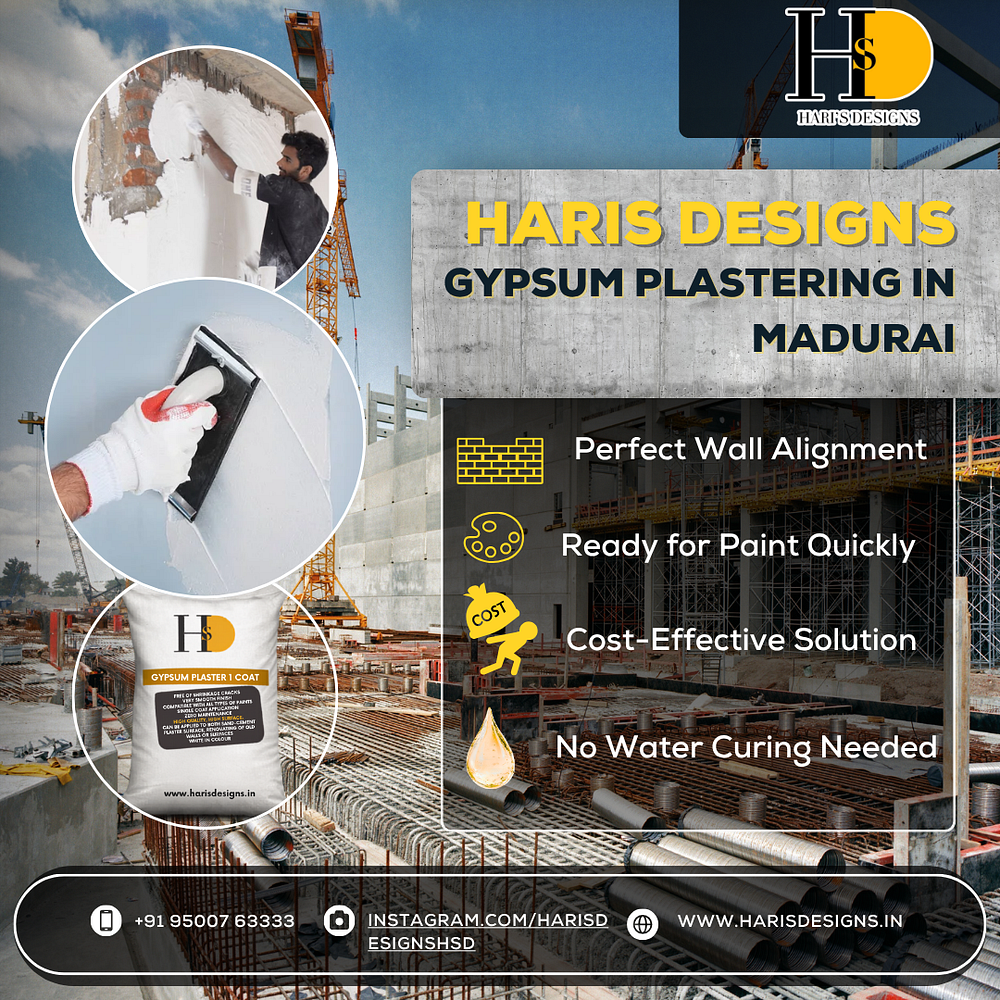
If your freshly painted wall in Madurai has already started showing cracks, the problem didn’t start with the paint — it started with the plaster. What looks like a minor surface issue is often the result of bigger mistakes in thickness, drying, and application methods. Understanding this early can save you from repeated repairs and unnecessary expenses. This is where many homeowners are now rethinking their approach and exploring Gypsum Plastering in Madurai as a more controlled and reliable option.
Why do cracks appear so quickly in Madurai homes?
Madurai’s climate plays a bigger role than most people realize. High temperatures accelerate drying, and when plaster dries too fast or unevenly, it shrinks. This shrinkage creates stress on the surface, leading to visible cracks after painting. Cement plaster is especially vulnerable here because it depends on proper curing. When curing is rushed or inconsistent — which is common — cracks are almost inevitable. The issue is not just weather; it’s the combination of climate and execution.
The hidden mistake: improper plaster thickness
One of the most common technical errors is applying plaster thicker than recommended. Thick layers take longer to dry internally, even if the surface looks dry. This creates uneven drying rates between the outer and inner layers, causing internal tension. Over time, that tension releases as cracks. On the other hand, very thin and poorly applied layers may not bond properly, leading to flaking. The balance is precise, and missing it is where most failures begin.
Drying vs curing: the confusion that causes damage
Many people assume drying and curing are the same — they are not. Cement plaster needs controlled curing with water to gain strength. Skipping or shortening this process weakens the structure. In contrast, gypsum plaster is designed to set chemically without water curing. This is one reason why Gypsum Plastering in Madurai is gaining attention — it reduces dependency on environmental conditions and manual curing practices. But even gypsum requires proper timing and skilled application to avoid surface defects.
The practical hack: why thin-layer application works better
Instead of applying a single thick coat, a controlled thin-layer approach ensures uniform drying and better adhesion. Thin layers:
- Reduce internal stress during drying
- Improve bonding with the surface
- Deliver a smoother, crack-resistant finish
This method is especially effective in hot climates like Madurai, where rapid drying is unavoidable. It’s not about using more material — it’s about using it correctly.
Where do most projects go wrong without anyone noticing?
The real issue is not visible during construction. Walls may look perfectly fine initially, and cracks only appear after painting, when it’s too late. This delay hides the root cause and often leads to blame being placed on paint quality instead of plastering errors. By the time repairs start, the cost and effort double.
When switching materials actually makes sense?
If your priority is reducing cracks and achieving a consistent finish, gypsum plaster can be a better fit for interiors. It allows for controlled thickness, faster setting, and minimal shrinkage when applied correctly. However, it’s important to remember that gypsum is not suitable for exterior walls or moisture-prone areas unless combined with proper protective measures. Choosing the right material for the right location is what prevents failure — not just switching blindly.
What you should do before your next plastering work
Ask clear, technical questions before work begins:
- What thickness will be applied?
- How will drying or curing be managed in this climate?
- Is the surface prepared to ensure proper bonding?
These questions may seem simple, but they directly determine whether your walls stay intact or start cracking within months.
The bottom line for Madurai homeowners
Cracks after painting are not bad luck — they are predictable outcomes of avoidable mistakes. Once you understand how thickness, drying, and climate interact, you gain control over the result. The goal is not just a good-looking wall on day one, but a durable finish that stays intact over time.
Address : 2, Plot No:7, 2256, 10th Street, Sivagangai Main Rd, Gomathipuram, Madurai, Tamil Nadu 625020.
For enquiries : +91 95007 63333 , +91 96290 79456.
Mail us for information : harisdesings@gmail.com.
#ConstructionTips #ModernHomes #MaduraiHomes #PlasterTechnology #SmoothWalls #ArchitectureEssentials #HarisDesigns #GypsumPlaster #WallFinishing #InteriorDesign


Comments
Post a Comment